
Words Matter
At the UK Micro Tanners Conference at the Great Cotmarsh Farm in England, we were challenged to rethink the way we speak about our tannage. If you click on our shop page today you will see that we call our sheepskin products Bark Tanned. That is a phrase we adopted over the years to try to explain what it is we do in common terms. Most people don’t know much about sheepskin let alone the tanning industry as a whole. We believe it is our responsibility to educate folks about the industry and why we feel “natural” or bark tanning is better for the environment than chrome tanning. But what is natural tanning? The word natural is used a lot to describe a cleaner way of doing business but it has been green washed by many different industries. The word natural isn’t the best way to describe what it is we do but we will still use it in our elevator speech: “we own and operate a natural sheepskin tannery”. We often follow up with “we use bark to preserve sheepskin”. The truth is we use a bark extract. The extract is created in a factory. In the case of our tannin, Mimosa ME, the bark is harvested from farmed acacia trees in South Africa. Those trees grow to maturity in 7-8 years. The bark is stripped off the tree and separated. The core wood from the acacia species is sent to Japan to make specialty paper. The bark is then heated with water and pressed in a way similar to a large coffee press. That liquid is then sprayed into a drying chamber, and the liquid is separated from the now powdered extract. We reconstitute that powdered extract into a tannin tea. That tea is what we use to tan sheepskin at Driftless Tannery.
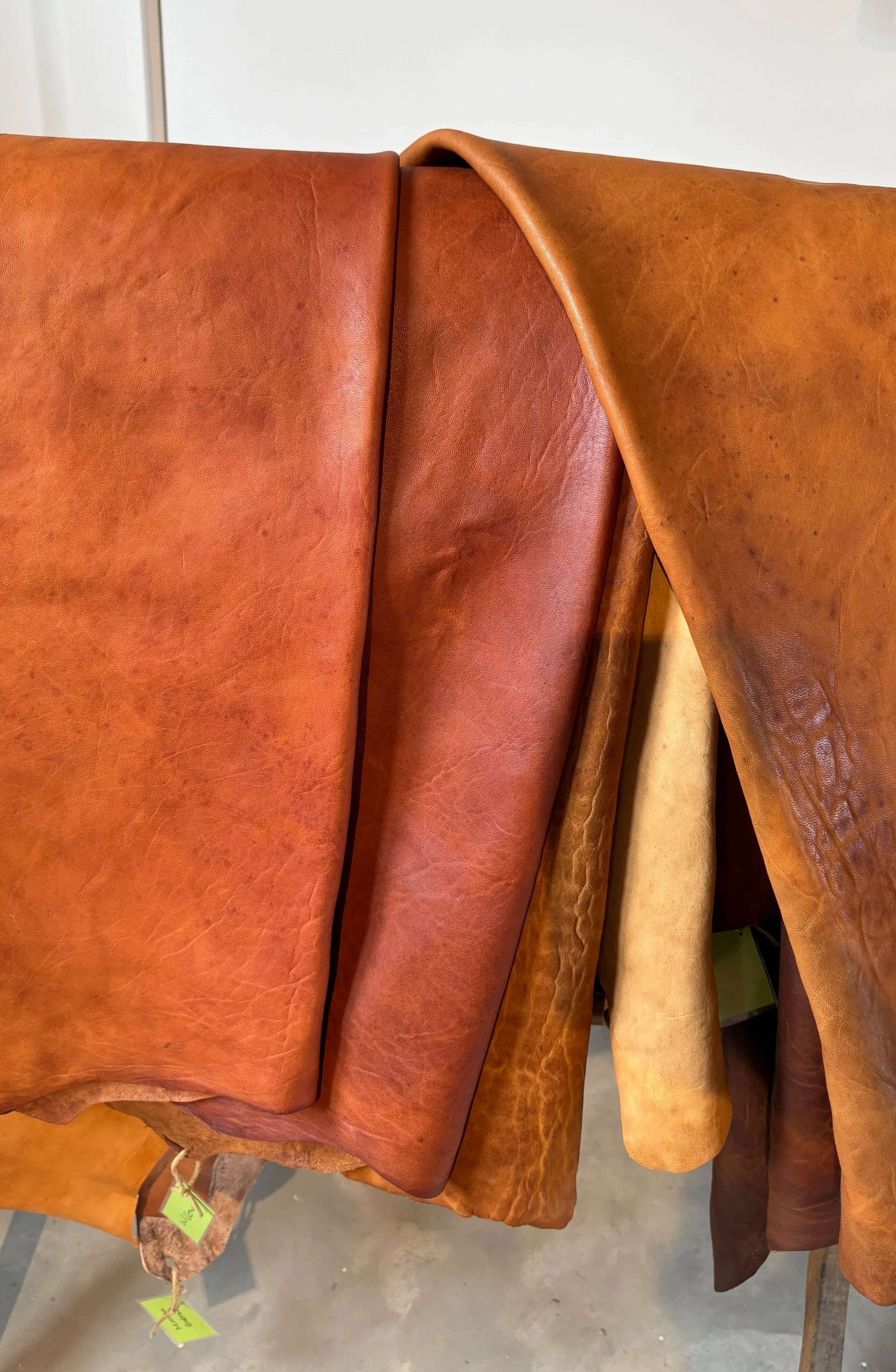
True bark tanners harvest bark from local sources, boil the bark to extract the tannins and then use those tannins to tan hides. It is an artisan method used by heritage craftspeople. It is a beautiful process deserving of the word natural. It is a process that can easily be used in small batches but does not work well at our kind of scale.
There are a few species of trees in Wisconsin where Driftless Tannery is located that are suitable to be used in bark tanning. Historically, tanners in Wisconsin used hemlock to tan hides. That process ended in the late 1800s. The trees were over harvested in that era, and few hemlock trees are left today. There are species like willow that could be used in our process but harvesting them at a scale that we could use would be time and cost prohibitive, not to mention the environmental impact we would make. So we use the available bark tanning extract that suits our needs. We rely on another industry to produce the bark extract that we use. Thankfully, that industry shares our desire for sustainability as well as our environmental ethos.
Examples of bark tanned leather are shown in the picture to the right. These are sheepskin that came from the same flock, all tanned with different species of trees in the UK. The tanner, Jane Robertson, used the same methodology to tan each one; ie, tannin strength, pH, etc. They are a beautiful representation of the different colors and qualities each tree species produces. Very special thanks to Jane of Oak and Smoke Tannery for educating us about the importance of language when we talk about artisan work.
While we are not bark tanners in the purest sense, we may continue to use the language we do in our elevator speech. It is simply the easiest way to get the point across to those who only have a few moments to hear our story. To those of you that follow us more closely, we want to be clear that we do not consider ourselves bark tanners. We are a production tannery that works hard to source ethical materials to preserve sheepskin for farmers and customers across the US. We believe the only way for us to meet the demand for our services currently is to use bark extracts. If you ever get the chance to meet a bark tanner, listen to their story, learn from them, buy their leather and thank them for keeping the craft alive. They are true artisans.
Thanks, as always, for following along on our journey to create the best product we can in the cleanest possible way.
-Team Driftless
