
Danielle and Bethany traveled to the Cotswolds in England for the first ever UK Micro Tanners Conference. Why did we have to travel all that way to attend a conference? The simple answer is that there isn’t a community like this (yet) in the US. The conference was hosted by James Allen of Cotmarsh Tannery and Serafima Mehhovits from Part of Nature Tannery. The gathering was located at the Great Cotmarsh Farm where James operates a non-profit, micro-scale tannery. James’ mission is to support the creation of other micro tanneries, to help re-invigorate a heritage craft, that once was a burgeoning part of British enterprise.
There were 60 attendees and 13 speakers. The speakers came from a variety of backgrounds. James Allen kicked off the week with the story of how Cotmarsh Tannery came to be. Serafima Mehhovits and Jane Robertson are micro scale bark tanners that harvest their own bark from local trees to tan and create beautiful one of a kind pieces of leather. Some tan on the same scale as we do here at Driftless like Jack Millington, who shares a similar backstory with us. Others like Claire Beaumont, Alice Robinson, and Andrew Rumming don’t do the tanning themselves, they are farmers and professionals that are a part of British Pasture Leather, a group dedicated to providing designers and fashion professionals with traceable leather. There were teachers and writers like Matt Richards, Sophie Kleppe and Hanna Nore. Industry professionals like Barry Knight, Karl Flowers and Kerry Senior with vast knowledge on the history and present state of the tanning industry worldwide. To say there was a lot of knowledge packed into the classroom at the Great Cotmarsh Farm is an understatement.
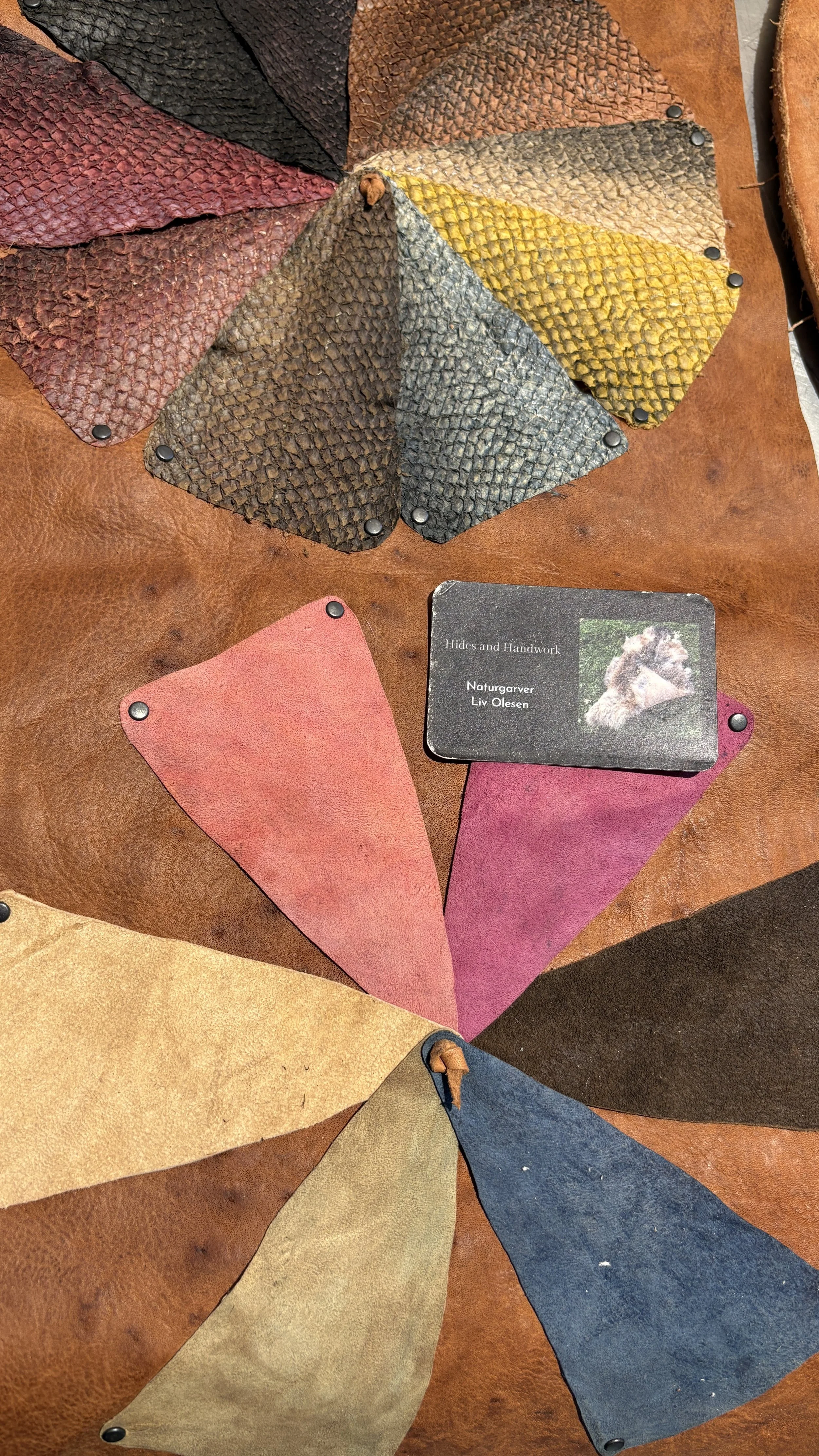
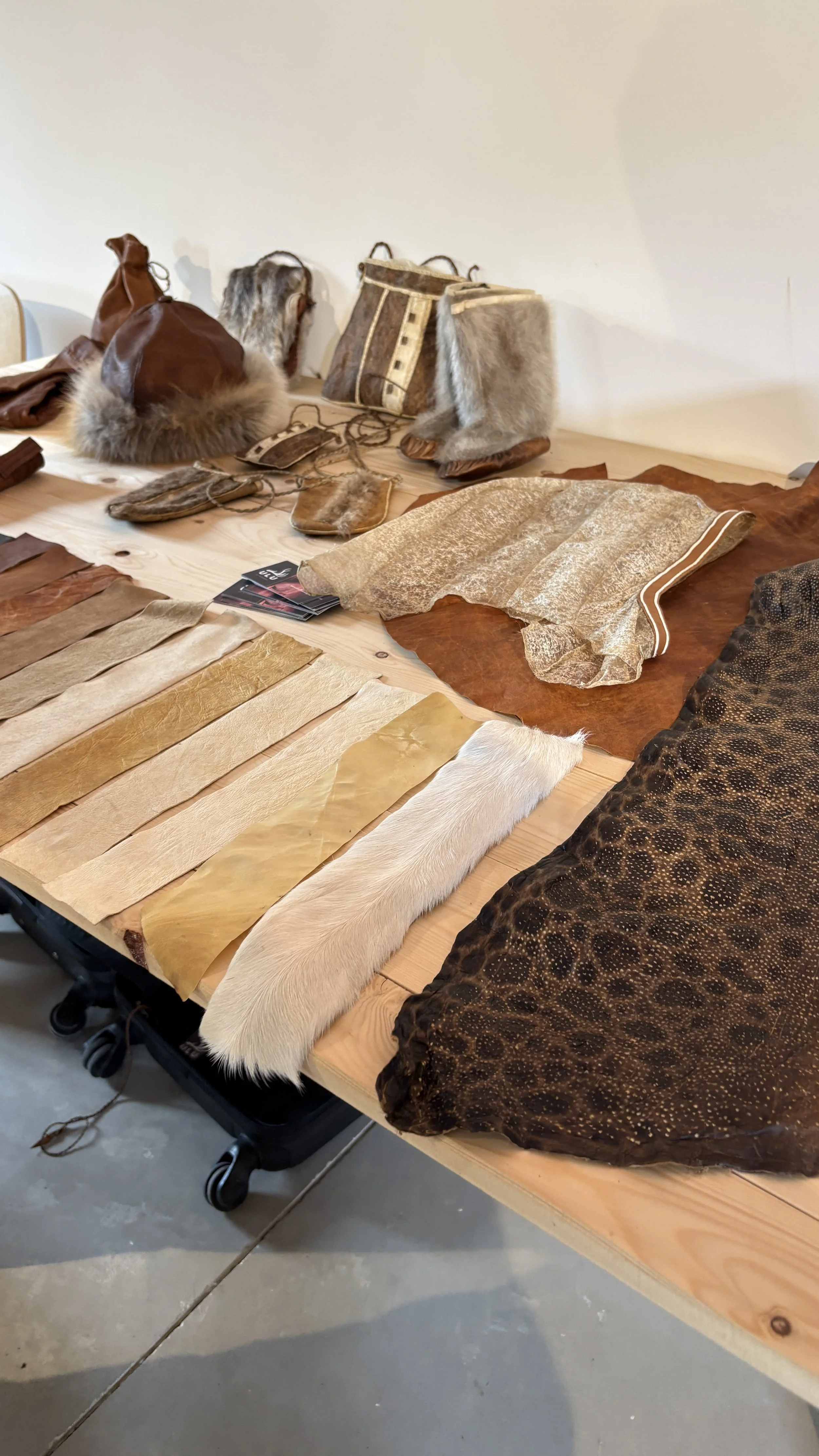
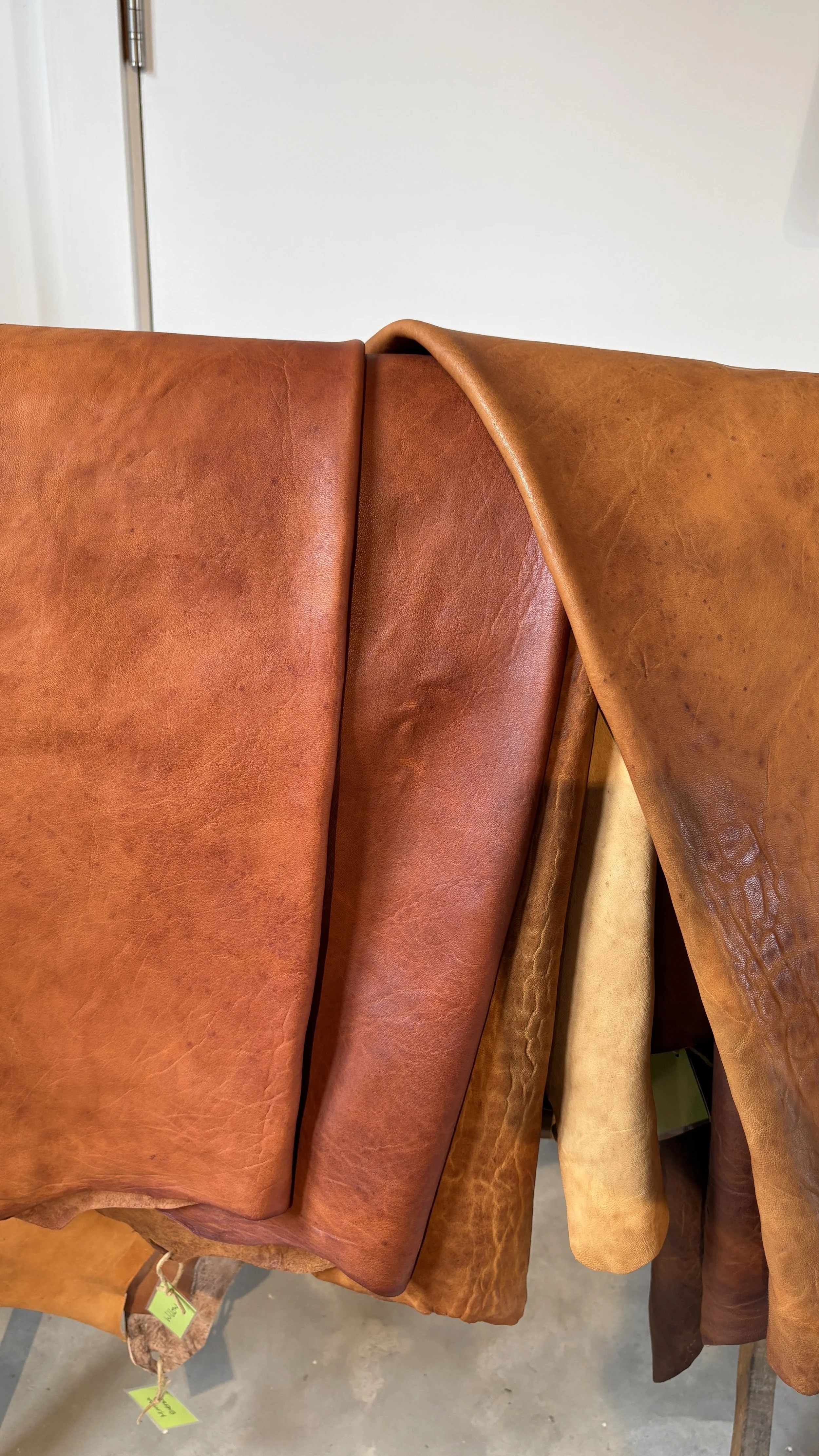
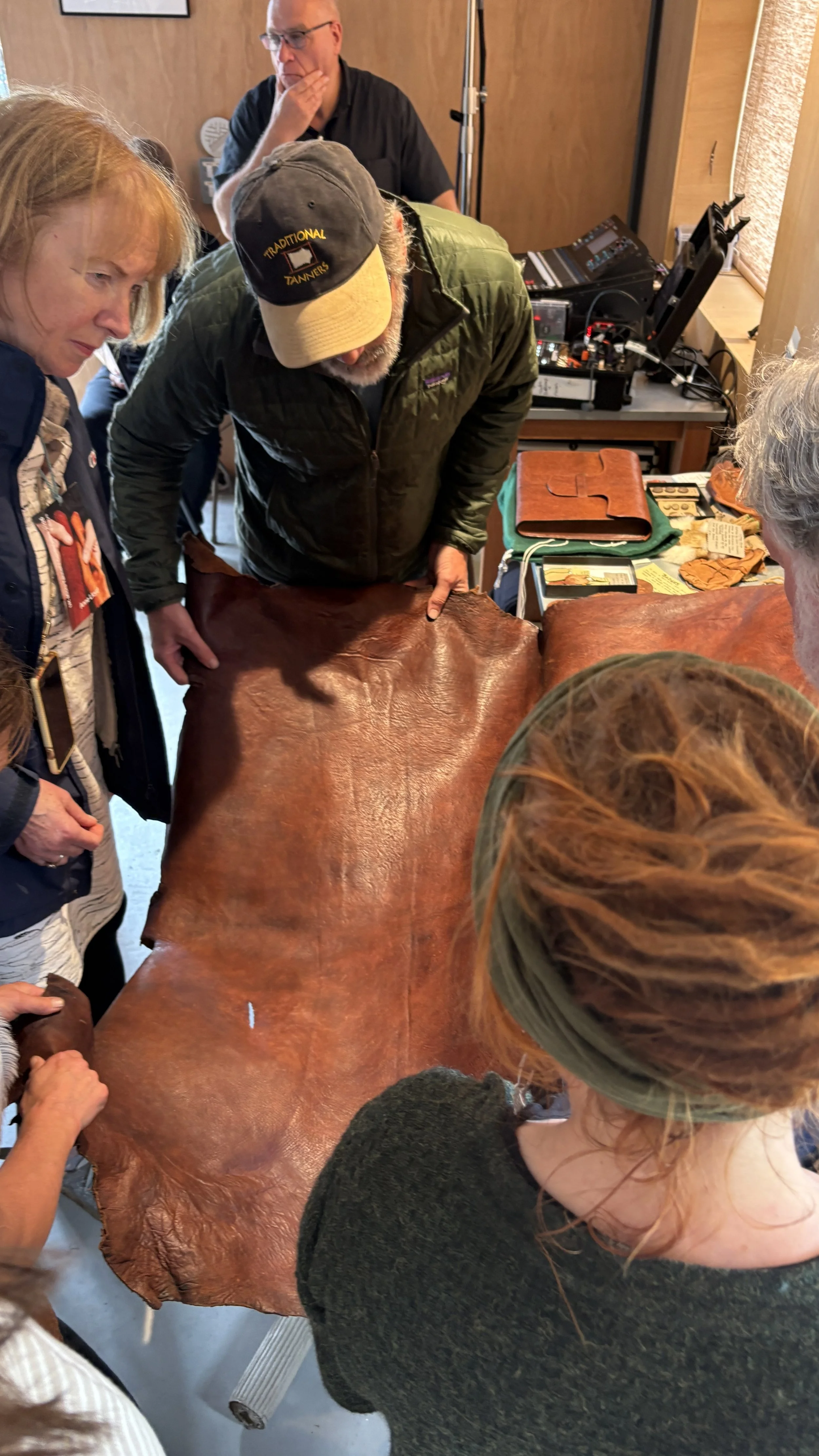
Attendees came from all over the world from New Zealand, North America, Europe and the UK. We shared one thing in common; our reverence for the heritage craft of tanning. In addition to tanners, there were book binders and taxidermists, foresters and leather craftsman. During breaks we discussed different tannins and different methods. We talked about hide sourcing and the wastestream. We discussed pricing and profitability. During the Spread of Leathers on the first day we saw examples of some incredible work. Liv Olesen brought examples of naturally dyed fish skin and reindeer leather (photo on the left). We have had the privilege of hosting Liv as an intern at our tannery a few years back. Sophie Kleppe brought many examples of her work including a tanned rain hat made from intestines. (2nd photo from the left). Jane Robertson had many sheepskin harvested from the same flock, each tanned with a different type of local bark to show the color and quality differences among the bark species (3rd photo from the left). The last photo on the right is of a piece of Russian leather that was rescued from a shipwreck dating back to the 1700’s that is still intact and very useable that MacGregor & Michael brought with them.
Some fun facts we learned about the history of tanning: parchment dates back to 40,000 BC, oil tanning was the next tannage to be used by humans and came about in 8000 BC, vegetable (bark) tanning started around 4000 BC, then alum tawning around 1600 BC, and chrome tanning took over the industry during the industrial revolution in the late 1800s. Most of the world’s leather and hair on hides are processed with chrome today. Chrome has its own environmental impact but beyond the chrome tannage, most leather makers use polyurethane, silica, acrylics and metal based dyes to finish their leather products. This is one of the reasons the industry writ large gets a bad rap.
The bark tanners taught us that bark is best harvested in the winter when the tannin content is the highest although it is easier to harvest in the spring when the sap is running. Unfortunately, spring harvested bark has sugars that will cause the tannin to ferment if you don’t use some sort of bactricide in the bath. Salt can be used as a bactricide in most natural tannages. Folks talked about different natural finishes like egg white, milk, glycerin, and linseed oil; a stark contrast to the previously mentioned chemical intense finishing processes. We found out how to best to retan or double tan leather in order to increase the leather’s heat resistance or strength. We learned tidbits like pigskin must be bated, a process traditionally involving animal feces, in order to remove the elastin in the skin fibers. That elastin will prevent the hide from laying flat once tanned. Sadly, we also found out that a myth we often share with folks is untrue: not every animal has enough brains in its skull to tan its own hide.
One thing that became obvious to us last week is that we do not make good leather. We found out that it is well known by professionals that the Mimosa ME that we use to tan our sheepskin, does not by itself create the best leather. We have decided at this time we are going to put a pause on our leather offerings. It’s time for us to focus on what we do best which is hair on sheep, goat and deer.
There was a subject that came up near the end of the conference that I will take time to really tease out in our next blog. That is the topic of bark tanning. We often say we bark tan sheepskin. We were challenged to define what is a bark tanner? Is it someone who harvests their own bark or can someone who uses bark extracts also be considered a bark tanner? Stay tuned for our thoughts on that topic.
We hope you are able to take the time to dive into the background of some of the folks we met by clicking on the links in the body of this blog. There are many amazing folks doing good work in the tanning industry and we hope you enjoy getting to know more about them.
Thanks as always for supporting the work we do at Driftless Tannery. We are a small but mighty part of the worldwide micro tanning community.
-Team Driftless
