
Mechanization
When we first sat down to discuss opening a natural tannery our goal was to mechanize traditional methods. We were naive enough to believe we could improve the process of brain tanning with equipment. We designated a brain blender, bought a tabletop flesher and an 8-foot tumbler, and built a smokehouse. We failed to produce anything useful with those tools. Individually they worked but not together as we had hoped. Over the years we tried a few different machines some have been a great help and others failed to produce the same results as our hands.
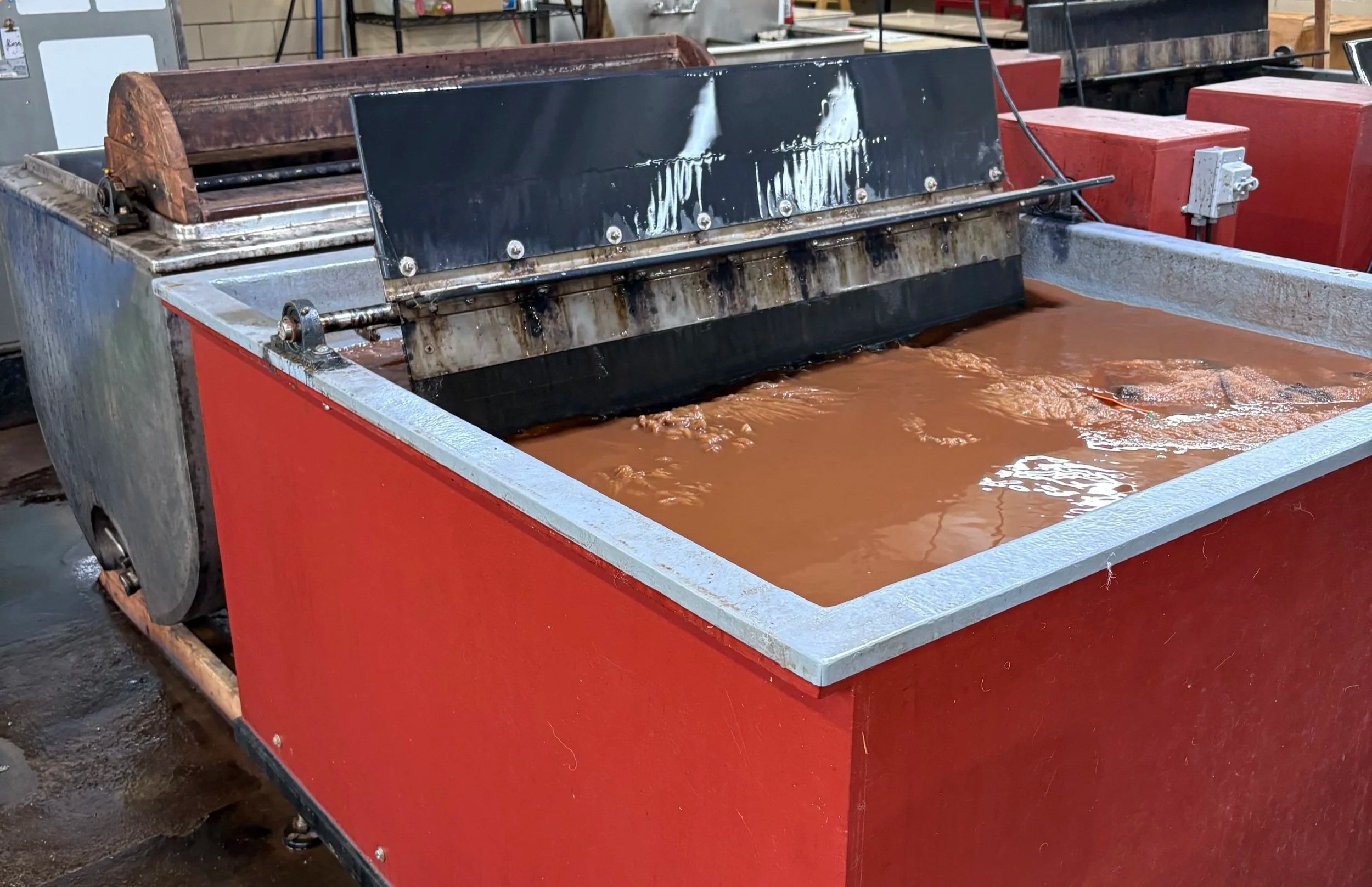
The 8-foot tumbler has proven invaluable in helping us to get our hides soft and supple. In the first year, we built ourselves a buffing table for giving the backside of the sheepskin a smooth suede finish and we had a local blacksmith/fabricator build us a brushing machine. The buffing table is used daily while the brushing machine is used only on the most stubborn of our sheepskin. It saves us hours of hand work when a sheepskin needs to be fully brushed out. We don’t use it on every sheepskin, as we pride ourselves in not overworking fiber and compromising its structure. This year we had a fabricator build us four large paddle vats. These paddle vats move the hides around and through the bark tannage saving us from having to manually stir the tanks several times a day. We have tried mechanical cleaning of the sheepskin in a commercial washing machine and have found that nothing replaces the attention to detail we can do by hand.
A few years ago, we made a risky investment. We imported a large fleshing machine. The online promotional videos for the machine show tanners feeding raw hides into the machine and within seconds the hide comes out clean of flesh and membrane. A dream machine. A task that takes us humans 10-60 minutes per hide (depending on the skill level) took mere seconds in the fleshing machine. This machine was going to save us so much time and physical exertion. Fleshing hides on a beam is physical work. Any given week we flesh between 40-50 sheepskin. If each one takes an average of 20 minutes to complete, that means that about 60+ hours spent on the fleshing beam each month. Of course, it made sense to invest in this machine. Our return on investment was going to be relatively quick. So, we took the plunge.
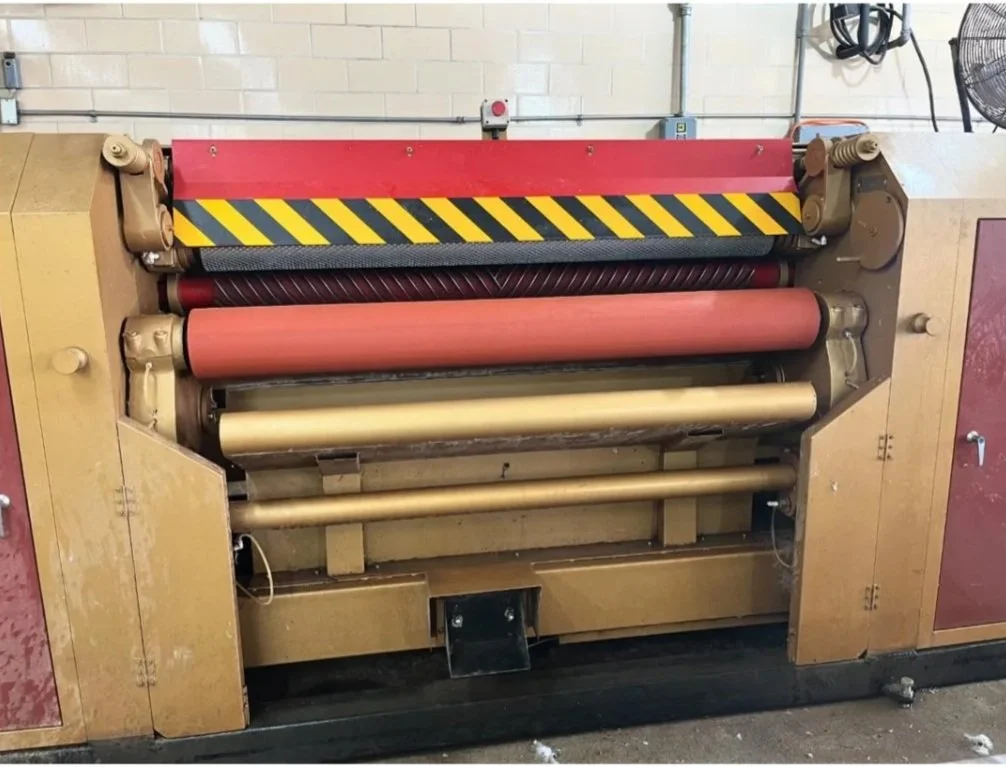
When it arrived, we got a bunch of hides from a local butcher to try out our new machine. Sadly, the results did not match the description. We destroyed hides. Tore them in half, shredded them. We persevered. We got another load of hides. This time we didn’t destroy all of them. We got a little better over time but found so many idosyncrocies with the sheepskin in particular that made the machine unfeasible in our operation. If there was a hidden burdock seed head in the fiber, that would cause the machine to slice a hole through the skin. If there was a butcher hole in the skin, the machine would seize it and make the hole larger or worse, tear it down the middle. We can use the machine for deer and goats, but it takes an hour to clean the machine after we use it. We will not risk putting customer hides through this machine and we don’t do enough retail hides each week to make the clean-up process worth it. Unfortunately, we don’t save any time on the process when we only do a few skins at a time. We have been paying on the loan for the fleshing machine for a couple of years now and have only put about 50 hours on the thing. That is why we put it up for sale a year ago. If you know of anyone interested in a fleshing machine, please pass along our contract information. Call/text your interest to 608-630-2960 or email us at driftlesstannery@gmail.com
This summer we bought a used wet drum to help mechanize our leather making, specifically to help us remove the hair mechanically and to then speed up the tanning process with more movement. After spending a lot of time and money trying to get it up and running, we found its function wasn’t worth the effort. The process did not go any quicker and the mess was not any more or less contained. While we weren’t able to keep that machine running due to its age, we may consider trying another drum in the future. For now, we are using static tanks and our hand labor to remove hair and tan leather.
All this to say, we failed to fully mechanize a traditional method of tanning. Our fleshing, washing and finishing work is done mostly by hand. Thankfully, we have been blessed with amazing staff that are passionate about preserving the sheepskin that our clients trust us with. We hope to have more information about the individuals working behind the scenes in our upcoming blog posts.
Thanks, as always, for following our journey.
Bethany and Danielle
